Somewhere in a European database there is a man who shares a first name, a surname and a nationality with the leader I interviewed for this piece. That man is on a sanctions list. The man I spoke to is not. Yet the systems cannot tell them apart.
Different birthplaces. Different birth dates. Different fathers’ names. None of it matters. Every time a screening system runs his details, it returns a match. Opening a bank account triggers it. Sending a courier package triggers it. And every time, he has to prove that he is a different person.
I started this series because I wanted to hear how leaders actually experience visibility, credibility and influence, rather than how the internet insists they should. I expected to talk about platforms. Aleksei Kariakin took the conversation somewhere better.
Aleksei talked about context. About the distance between what a system can see about you and what is true. And about what happens when you carry a business, a team or a career across a border and assume that what worked before will keep working.
The man in the middle
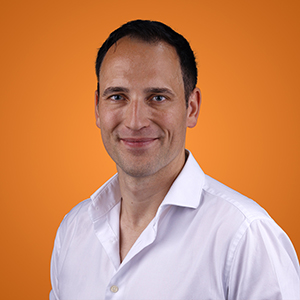
Aleksei has lived in Dubai for three years. He is General Manager at Red Haven, an AI startup building in what he describes as the AI entertainment space. Mobile games, specifically.
The route he took is less obvious than most. He trained as a lawyer and he holds a PhD in international law. He came to Dubai as General Manager of a consultancy helping companies from around the world set up in the UAE. Then he moved into gaming.
I asked him why.
“Because I see more possibilities for me. More opportunities.”
That is a short answer to a big question, and I pushed on whether going international had always been the plan. Here he became noticeably more animated, and the next half hour was the real conversation.
“I think it’s my mission to connect different parts of the world. I’m like a bridge between the UAE and other mentalities, other countries, because I understand the local mentality, and I can explain it to Europeans, for example, who have a totally different mentality.”
That word, bridge, came back several times in our conversation. It is how he understands his own value.
What does not travel
I put a fairly standard assumption to him: Europe over-regulates, the UAE moves faster, and that is why founders are relocating. I have heard this at every business breakfast in this city.
“It’s case by case,” Aleksei said, and gave me two examples where the local regulator was stricter than the EU.
The first involved a British entrepreneur running a staff outsourcing business. A change in UK law sent him looking for somewhere with a lighter tax burden.
“In the UAE, licensing for staff outsourcing is much stricter than in the UK and most European countries. He needed additional approval from the Ministry of Human Resources and Emiratisation, a special office with special requirements, a bank guarantee for one million dirhams, staff with proper experience which had to be proven. When he got all this information, he realised that with such strict regulations his business model could not work in the UAE.”
The second case was a car leasing business, barely regulated at home. In the UAE, this setup counts as a financial activity, which left the owner with a choice between an expensive financial licence and a local partner.
It’s not possible to copy a working business model from one country and implement it in another country. A successful business model usually needs local adaptation.
That made me ask why staff outsourcing is tightly controlled here while a startup can set up in days.
“Here, most of the workers are from another country, so staff outsourcing is one of the main areas in local life. It’s like financial, like oil and gas trading,” Aleksei explained.
The sectors closest to the machinery of a country get watched most closely, and which sectors those are depends on where you stand. You cannot read a regulatory environment as strict or relaxed. You have to know what a place is protecting.
In Aleksei’s current field, AI, his reasoning is not about tax.
“In some countries you can’t explore the full potential of AI projects because of legal restrictions. Here the government actively supports them. Since 2017, the UAE has a Ministry of AI. When I’m living here, I’m feeling that I’m living in the future.”
His view of the UAE is not a blanket endorsement. It is sector by sector, earned through cases that went badly as well as ones that went well.
Common language is not about language
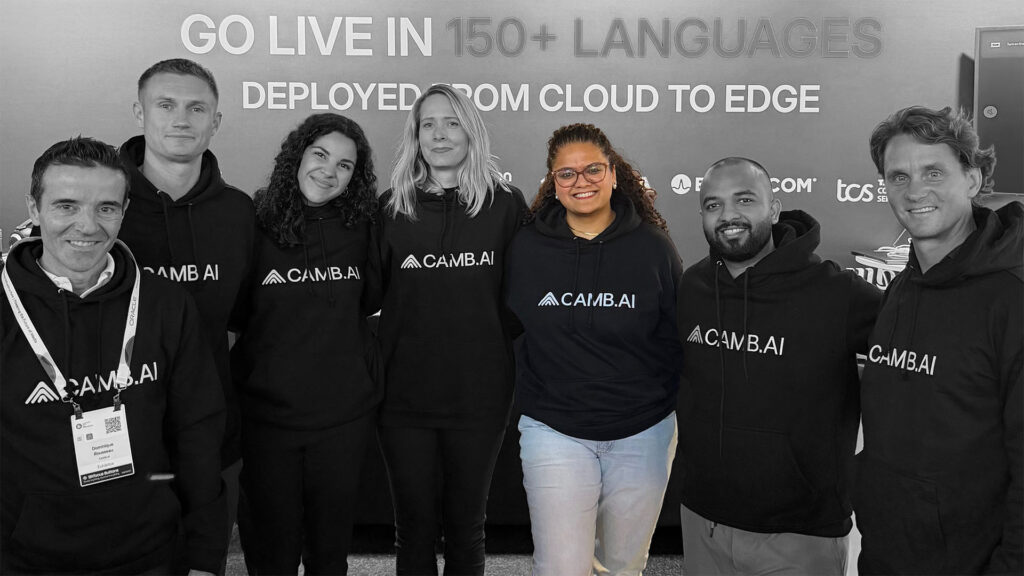
Red Haven is small by design. A handful of people, a project far larger than that headcount would traditionally support, and AI closing the gap. This is what a lot of companies are going to look like.
Aleksei’s team is spread across the globe, which creates the challenge every leader of a distributed team eventually hits. Less visibility, less control, and no corridor to catch someone in. His fix is unglamorous and entirely logical.
“You should give your team clear tasks, and everyone must know what they do, what they are responsible for, and what I am expecting from them. This solves most misunderstandings.”
Instagram post
This post is hosted by Instagram. Loading it connects you to Instagram, which may set cookies. More in my privacy policy.
I said that sounded like it came down to communication, and he agreed immediately. But Aleksei goes further than most remote leadership advice does.
“With the team members who are here, we find a common language. And I don’t mean language itself. It’s about understanding the context in which people live and work. If you understand the people you work with, it’s much easier to collaborate.”
Knowing enough about someone’s circumstances, in other words, makes their behaviour legible to you. And Aleksei treats building that knowledge as work.
“We celebrate holidays, order pizza to our office, talk about casual topics. Chats during coffee breaks are not a waste of time. It makes the team a real team.”
For team members scattered across time zones it is harder, and Aleksei does not pretend otherwise. That’s why, for him, group chats are not only for work, and he prefers video calls with cameras switched on.
“When you see and know your team members, you are feeling that you are a member of something bigger than you.”
I have seen organisations try to buy that outcome with software. Aleksei is doing it with pizza and group chats.
AI did not take his job, it gave him one
A lawyer running an AI startup. Given what he builds, I expected a confident answer when I asked him about his career switch. I got a more personal one.
I did not lose my job because of AI. I got a new one because of AI.
The technology did not displace Aleksei’s expertise, it created a role that needed exactly his combination of experience. He does not present that as a universal law, and it isn’t one. But it is a useful counterweight to a debate that runs almost entirely one way.
“Life is changing all the time, and it’s a normal process. You can fight with reality, you can fight with the whole world. Or you can adapt, you can accept this, and you can live in the new world.”
“In my childhood I didn’t have a mobile phone, I didn’t have internet at my home. But now I have it, I like it. Two hundred years ago, some people, you know, they turned on the lighting in the streets. When we got electricity, this role was not relevant. But you can change your role, you can change your life. Your life is in your hands.”
Our conversation landed somewhere between optimism and honest uncertainty, and I preferred that to false confidence.
“We don’t know how this technology will change the world. Maybe because of this, people are a little bit scared. I also don’t know how everything will change, but I hope everything will be okay. This is what I got here in the UAE. It’s how to accept things. It’s part of the local mentality, and I find this really cool.”
The name on the list
Towards the end of our conversation, I mentioned something I say often. I told Aleksei why I avoid the word “problem” and prefer “challenge”, because a challenge usually has an opportunity hiding inside it.
Aleksei said he had a story about that.
“A person with the same name, same surname and same nationality as me is on the European Union sanctions list. I’m not related to him. We have different birthplaces, different birth dates and different fathers’ names. But every time there is a sanctions screening, the system shows a match. When I’m opening a bank account, or I want to send a letter with DHL, I have to go to extra screening. Every time I must explain that I’m not on a sanctions list, and it takes time.”
Then came the turn.
“But this is a challenge. And because of this challenge I became a compliance professional. Now I know everything about sanctions screening, which sanctions lists exist, all this stuff.”
Systems read your name. People read your story.
Aleksei’s sanctions challenge is an extreme example of a broader problem: search results, screening tools and increasingly AI models form a view of you before any human does, and they build it from fragments. You cannot prevent that. You can decide how much accurate material is available for them to find.
Most people are being read long before they are met. Very few have decided what there is to read.
The Human Leadership Lens with Aleksei Kariakin
The Human Leadership Lens is a conversation series with leaders across industries about visibility, credibility and influence in a digital-first world. Aleksei Kariakin is General Manager at Red Haven and holds a PhD in international law. We spoke in Dubai.