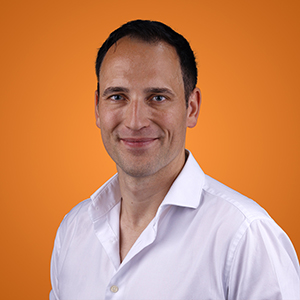
When Neha Modi joined Starzplay in June 2015, the streaming service had been live across the Middle East and North Africa for a couple of months. She had just arrived in Dubai from India, and her job as a device engineer was to evaluate set-top boxes and work out how to get the Starzplay app running on them.
Today, most of us watch television on platforms such as Netflix and Prime Video. In 2015, neither had launched in the region yet. “We used to count customers every day, how many subscribers there were,” she said. “It was that exciting a journey.”
By her count, there were 2.5 million of them when she left eight years later.
Neha now works in pre-sales for CAMB.AI, which delivers AI-powered media solutions. I asked Neha to walk me through fifteen years in broadcast technology, from IPTV in India to streaming in the Middle East. The technology filled one answer. After that, whatever I asked, she came back to people. She said “human connection” six times in under half an hour, and halfway through I told her I had noticed.
It all got connected
Neha started out in India at Reliance Jio, testing technology from third-party suppliers. The work gave her a first, hands-on look at IPTV and at how content comes in from a satellite. Curious to learn more, she moved to a company that built chips for set-top boxes, and visited customers as a field application engineer to help them set the boxes up.
Then both her personal and her professional life entered a new chapter: she married and moved to Dubai, open to working in any industry.
“At that time, having a job was very important for me,” she said. “But I think it all got connected, and the universe wanted me to be in that same industry.”
She met Starzplay’s chief technology officer at a time when the company was looking for people from the industry. Over the next eight years she moved from device engineer to QA lead, where she learned automation and built the entire testing framework behind the platform, and then to product manager. She credits the managers who helped her grow into each role. “I was very much blessed to have them.”
Her last assignment there covered four white-label streaming platforms, in Pakistan, Saudi Arabia, Egypt and India.
Hearing her story, I admitted that I had always assumed the UAE mostly imported its technology. Neha had arrived thinking the same, she said, and then not only watched that change but was part of it.
“At Starzplay we built everything in-house, and our technology was so strong that we started white-labelling it to other OTT platforms to launch their services.”
From Starzplay, she eventually moved to the pay-TV network OSN, where she again combined technology and product.
Less about control, more about clarity
I asked Neha how she had led teams through work that was as new to her as it was to them. She started with geography. At Starzplay, her team was based across Pakistan and Spain. At OSN, part of her team sat with multiple vendors, some in India, some elsewhere in the world. Alignment and time zones were the main challenges.
“You don’t have that human connection, because everything you are doing is technology, calls, meetings,” she said. “But what I have learned is that it’s less about control and more about clarity. I feel that remote teams usually do not fail because people are lazy. They fail because priorities become fragmented.”
In every role where she has led people, her answer has been to repeat the vision, constantly.
“I make sure that everyone understands why we exist, why the company exists, what success will look like and what matters most right now. If the vision and the goal of the company are very clear, no matter what part of the world you are working in, you know why you are working for it.”
Coming from product management, Neha told me she believes strongly in a North Star metric: one common goal that aligns the whole organisation, with every other metric feeding into it.
“I even have my own personal North Star metric to achieve certain goals, you know, fitness or health or family. It works everywhere, I feel.”
“Coming back to it, the main thing is that technology alone cannot build strong teams. Human connection still matters,” she added. “The psychological safety of the team you are leading is very important, and that’s how remote cultures actually flourish. Whatever is built on trust, clarity, accountability and a shared purpose always wins.”
Grab your own virtual coffee
I shared a worry of my own. Video calls became the norm during Covid, even between colleagues who shared an office, and they never went away. Are we losing what happens around a meeting: the chat before it starts, the conversation at the coffee machine afterwards? Should we go back to meeting in person?
Neha agreed. A quarterly meet-up across the team is obviously the best way, she said, but given company budgets, that is very challenging.
So her teams found other ways.
During Covid she was a QA lead at Starzplay.
“We used to make reels, because we had all these young QA engineers. It was just for fun.”
At OSN there was a Friday breakfast.
“Be it virtual or anything, you can grab your own coffee, but then you are just having informal conversations: what you learn, anything about life, apart from work.”
And there were the one-on-ones.
“Once a month, as a manager, it’s my responsibility to talk to each and every person in my team one-on-one. In the day-to-day, there are higher chances of miscommunication. That one-on-one is always an opportunity to understand your team better, so that they also understand you better.”
The weight behind the freedom
“Product management changed my mindset,” she said. “It forced me to think beyond execution and look at the entire business ecosystem. In large organisations, you often become excellent at just optimising one part of it.”
That mindset took her into another role last year, which she calls her entrepreneurship journey: building a company’s office in the region from scratch. Office space, the trade licence, leads, customers.
“I was wearing multiple hats,” she said. “I managed to onboard three customers from the region and build a million-dollar pipeline.”
I asked her about that shift, from large organisations to building something from scratch, and told her how I see it, having moved from corporate to self-employment myself. People who have only worked in corporate often imagine being your own boss as freedom, flexibility, heaven on earth. The freedom is real. But you trade one boss for many, because every client becomes one. Success, for me, is finding the right balance between that freedom and the responsibility I carry for each of them.
Neha’s answer:
Freedom and responsibility are deeply connected. Entrepreneurship and leadership can look very glamorous from the outside, you know, the flashy titles, you are everywhere. But people often do not see the emotional weight behind that freedom. Every decision a leader makes impacts the people around them.
Decision fatigue is real
As a QA lead and a product manager, Neha had been on the receiving end of those decisions.
“I used to get frustrated sometimes in my past companies: today we are working on something, the next day it changed, they paused it, and now we are working on something else. But then, being in their shoes, I realised that decision fatigue is very real, because leaders are constantly making difficult decisions, often without even having perfect information.”
“I also feel that the most underestimated aspect of leadership is loneliness,” she went on. “Sometimes you are carrying pressure very, very silently. You are struggling with something, maybe an investor, whatever the issue might be, but you don’t want to pass that pressure on to your team.”
“That is why I believe freedom without responsibility becomes chaos,” she concluded. “Real leadership is all about learning how to balance both, with clarity, stability and accountability.”
Instagram post
This post is hosted by Instagram. Loading it connects you to Instagram, which may set cookies. More in my privacy policy.
Don’t let it be a habit
Neha has lived in Dubai for eleven years. Her daughter was born and raised in the emirate.
“For her, Dubai is like home. She goes to India for a vacation, but she always says, ‘Let’s go back home.’”
Neha sees herself staying at least another five to ten years. I took that timeframe and asked what people should start learning now to keep up in a city that was moving at breakneck speed even before AI entered the picture.
“The AI hype is for real,” Neha acknowledged. “Of course we are learning about prompt engineering, how to use AI, but how to use AI responsibly is also very important. Five to ten years down the line, when our kids grow up, AI will be for them what mobile phones are for us.”
“If we are too dependent on it, we will not be able to be that creative, and I don’t want to lose that essence. Again, it comes back to the human connection, to emotions like empathy. I want children to carry forward the values we have grown up with. Of course, learning AI is good, but just consider it as a tool. Don’t let it be a habit that you go to AI for anything, even when you are upset.”
When I said that some people already use AI as their psychologist, she told me she had seen it among a lot of her friends, even in her own generation.
“We should be cautious, because if we have started doing this, this is what our children are observing, and they will do the same.”
So when she is upset, or has something to talk out, she picks up the phone and calls her parents or her sister.
“I make sure that my daughter is watching and observing that if I am not well or if I’m upset, I should be talking to someone close in my family, and not rely on any tools.”
Neha has spent fifteen years making sure a signal gets from a satellite or a server to someone’s screen. Almost everything she told me about leadership came back to what that signal cannot carry: why the work matters, the conversation that has no agenda, the pressure a leader chooses not to pass on.
Where to take a bad day is something her daughter is learning now, by watching her mother pick up the phone. Your team learns from you the same way, whether you mean to teach them or not.
Technology can carry a signal. It cannot set an example.
The Human Leadership Lens with Neha Modi
The Human Leadership Lens is a conversation series with leaders across industries about visibility, credibility and influence in a digital-first world. Neha Modi works in pre-sales for CAMB.AI and is a product and growth leader with experience in OTT and streaming platforms across the Middle East. We spoke in Dubai.